

TLDR; At a glance: Optical Macro Mastery • Rule of Odds • Polarize for Color • Ground-Level Perspectives • Motion Stability • Optical Depth • Steady Shooting
Spring 2026 marks a shift in visual language, moving away from clinical AI sharpness toward an "intentionally imperfect" aesthetic defined by authentic textures and organic storytelling.
Professional mobile photography now requires a blend of classical composition and atmospheric adaptability. These eight foundational pillars will help you elevate your phone photography.

Tip #1 - Master the Macro: Beyond Digital Shortcuts
Spring is hidden in the details and most phone photographers fail to capture the "soul” of renewal season.
The Pitfall of Dedicated Macro Mode
Most phones automatically switch to a "Macro Mode" when you get close. This usually utilizes the built-in ultra-wide lens, which has a much smaller sensor than your main camera. The result? Unclear and distorted “mushy” images enhanced with the phone’s AI.
The Built-in Telephoto Struggle
A common pro-sumer trick is to step back and use the 2x or 3x telephoto lens. But it starts focus hunting because built-in telephoto lenses aren't designed for close-range work resulting in jitters.
The Professional Solution: Use Your Main Camera Sensor
To achieve clear high-detailed magnification that software simply cannot replicate, you need a dedicated glass solution on your main phone camera sensor that captures the highest resolution.
-
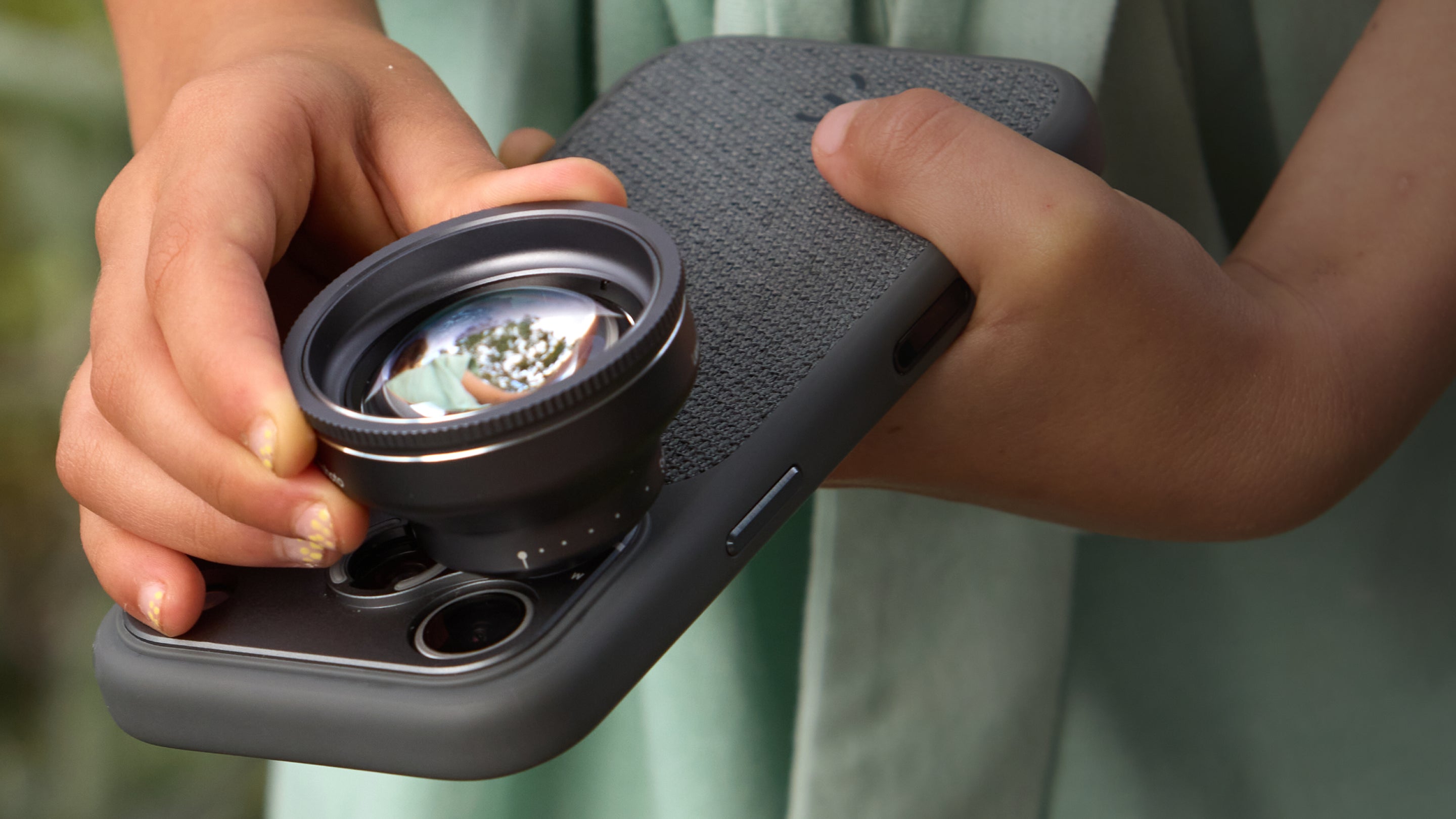
How To Do It: Use a dedicated external macro lens to maintain a comfortable distance (preserving your light) while achieving razor-sharp focus on the finest macro details.
-
Pro Tip: Once positioned, tap and hold your subject on the screen to engage Focus Lock (AF/AE Lock). This ensures the crispest point of contact remains exactly where you intended.
Gear that Helps: The LensUltra 75mm Macro is the gold standard for spring. It allows you to capture stunning close-ups of insects and blossoms without getting so close that you block your own light or disturb the scene.

LensUltra 75mm Long Range Macro
Detail From a Distance.
Includes 75mm Long Range Macro Lens. S.Mount case sold separately.
Reveal what others miss. The LensUltra 75mm Long Range Macro Lens offers 10x optical magnification — capturing fine textures, patterns, and detail from a comfortable distance.
Learn More
Tip #2 - Use the Geometry of Growth to Capture Energy
In nature, perfect symmetry can often feel artificial and "stiff." To capture the organic raw energy of the season, utilize the "Rule of Odds." Images featuring an even number of subjects—like a pair of blossoms—often create a visual "tug-of-war" where the viewer’s eye gets stuck between the two points.
-
How To Do It: Frame your shot so that three or five primary elements form a dynamic triangle. This creates a natural path for the eye to follow.
-
Proper Composition: Avoid centering your subject; use the grid lines on your phone to place new growth along the intersections. Use the "leading lines" of branches to guide the eye toward your focal point.


Tip #3 - Polarize and Uncover True Colors
Have you ever photographed a vibrant green meadow only for the final photo to look "white-washed" or hazy? Spring foliage is often covered in "specular highlight" glare—micro-reflections from dew and waxy leaves that dilute the actual color. No amount of editing can "un-reflect" that light once the shutter clicks.
-
How To Do It: Use a Circular Polarizing (CPL) filter. This is the only way to physically cut through reflections to reveal the deep, saturated greens and blues hidden underneath.
-
The "Cheat Code": Since it rains the most in Spring, this is a crucial piece of gear for shooting after a spring rain. A CPL filter transforms "shiny/wet" surfaces into rich, textured subjects.
Gear that Helps: Our Cinema Mobile CPL Filter doesn't just darken the sky; it reveals hidden textures by stripping away distracting glare that your phone sensor otherwise simply can't ignore.

CPL Filter
Clarity. Color. Reflection.
Includes CPL Filter and Filter Case.
Cut glare and reveal the story. The Cinema Mobile CPL Filter uses advanced polarization to eliminate reflections from glass, water, and polished surfaces, allowing richer colors and hidden details to emerge.
Learn More
Tip #4 - Here's Why You Should Shoot Low and Wide
Most people shoot the world from eye level, which makes everything look like a standard "tourist snap." To make a field of clover feel like an immersive forest, or make an insect look human sized, you need to change your altitude.
However, flipping your phone upside down to get closer to the ground usually triggers the built-in "Ultra-Wide" sensor. Yes, the same one that tries to capture in "Macro Mode". As established in Tip #1, these sensors are small and struggle in the shadows near the ground, leaving your "epic" low-angle shot looking grainy, soft, and digitally processed.
-
How To Do It: You simply can't do it, unless you don't care about sensor noise and blurry edges.
-
The Professional Fix: Instead of relying on your phone's native ultra-wide lens, use a dedicated Wide-Angle attachment over your primary high-resolution sensor (1x). This allows you to capture that massive, cinematic field of view while utilizing the superior light-gathering power and detail of your main sensor.
Gear that Helps: The LensUltra 16mm Wide Angle provides a sprawling, 100° field of view without the "mushy" edges or noise of built-in wide sensors. It’s the perfect tool for making spring blooms feel larger than life while maintaining edge-to-edge professional clarity.

LensUltra 16mm Wide-Angle Lens
Expand the Frame. Stay True.
Includes 16mm Wide Angle Lens, Lens Pouch, Quick Start Guide, and Warranty. S.Mount case sold separately.
Capture the big picture without the compromise. The LensUltra 16mm Wide-Angle Lens expands your field of view to 110°, delivering expansive landscapes and architectural shots with zero distortion.
Learn More
Tip #5 - Timed Changes of Spring
The most beautiful parts of spring—the movement of storm clouds or a flower slowly opening—happen too slowly for a standard photo. However, trying to hold a phone still for a 30-second time-lapse is impossible; even your heartbeat creates "micro-shakes" that can make the final video look nauseating and amateur.
-
How To Do It: Set your phone to "Time-lapse" mode and secure it to a rock-solid stand/platform.
-
Pro Tip: Keep you gear dry by using a magnetically mounting stand for quick setup and breakdown as those unpredictable April showers roll in without a heads-up.
Gear that Helps: The SnapStand Max is the perfect companion for field work. It transitions from handheld to full-sized tripod which eliminates the "wobble" of handheld shooting but still packs down small enough to fit in a jacket pocket.

SnapStand Max
Versatile. Adjustable. Reliable.
Includes SnapStand Max and Removable Bluetooth Remote.
Reach new creative heights. The SnapStand Max is the ultimate mobile tripod and selfie stick, extending up to a professional-grade 180cm. Featuring a MagSafe-compatible magnetic mount and a 200° tilt-adjustable head, it offers total framing flexibility.
Learn More
Tip #6 - Ditch "Portrait Mode" for Real Bokeh
"Portrait Mode" uses AI to guess where an object ends and the background begins. For complex spring subjects like a dandelion or a blossoming cherry branch, the software often gets confused, "eating" the delicate edges of petals or leaving a weird digital "halo" around the stems. This fake blur looks clinical, inconsistent, and takes the "soul" out of a natural scene.
-
How To Do It: Turn off your phone's digital "Portrait" setting entirely so that you never automatically switch to shooting artificial shots.
-
The Professional Fix: Switch to a dedicated 60mm Telephoto lens attached to your primary (1x) sensor. Instead of a software algorithm guessing the depth, you are using the actual physics of the glass to create a natural, creamy background. Because it is a true optical transition, every fine hair and intricate petal edge remains perfectly sharp while the background melts away organically.
Gear that Helps: The LensUltra 60mm Telephoto is designed for high-resolution depth. It provides a stunning 2x magnification with professional-grade background compression that makes your subject "pop" with authentic, buttery bokeh.

LensUltra 60mm Telephoto Lens
Sharper. Clearer. Closer.
Includes LensUltra 60mm Telephoto Lens, Lens Hood, Lens Cap, and Microfiber Pouch. S.Mount case sold separately.
Bring your subject into focus with professional-grade compression. The LensUltra 60mm Telephoto Lens offers 2–5x true optical zoom, delivering stunning clarity and natural bokeh without the digital noise of a smartphone zoom.
Learn More
Tip #7 - Don't Shoot with a Shaky Hand
Smartphones are thin, slippery, and hard to grip. When you're trying to line up a precise composition or pan across a field of wildflowers, tapping the screen to take the photo often causes a "shutter jar"—a tiny jolt that ruins the sharpness of your shot at the exact moment of capture.
-
How To Do It: Use a DSLR-style grip to give your phone the weight and ergonomics of a professional camera.
-
Benefit: This allows you to use a physical shutter button, reducing the "shake" caused by tapping the screen. It gives you the stability to pan smoothly without the "micro-jitters."
Gear that Helps: The ProGrip transforms your phone into a professional workstation, providing a secure hold for all-day spring adventures and even charging your phone while you shoot.

ProGrip Starter Kit
Grip. Charge. Shoot.
Includes ProGrip, Cold Shoe Mount, Pouch, and USB-C Charging Cable.
The ProGrip Starter Kit features a signature ergonomic battery grip that lets you shoot all day with its built-in wireless power bank. Designed with a DSLR-like shutter button and a 180° rotating mount, it provides the ultimate stability and comfort for both landscape and portrait content.
Learn MoreElevate Your Spring Story with ShiftCam
Don't let the beauty of the season be limited by your phone's default software. By combining these compositional strategies with the optical precision of LensUltra, you can capture spring exactly how it feels: vibrant, detailed, and full of life.
Share:
The Ultimate Valentine’s Day Gift Guide for Creators: Elevate Your Shared Story
Meet V-Series: A New Standard for Mobile Optics